


SAFETY
WHY TYVASO?
SO
you can offer your patients a well-tolerated treatment for PH-ILD2

Most frequently occurring adverse events (>10% in either group)2
Discontinuation rates due to an AE were similar for TYVASO and placebo at 9.8% and 8.0%, respectively.1
SAFETY ENDPOINTS
Below is a post hoc analysis of data from a prespecified safety endpoint. Interpret with appropriate caution. The clinical significance of differences in FVC is unknown.
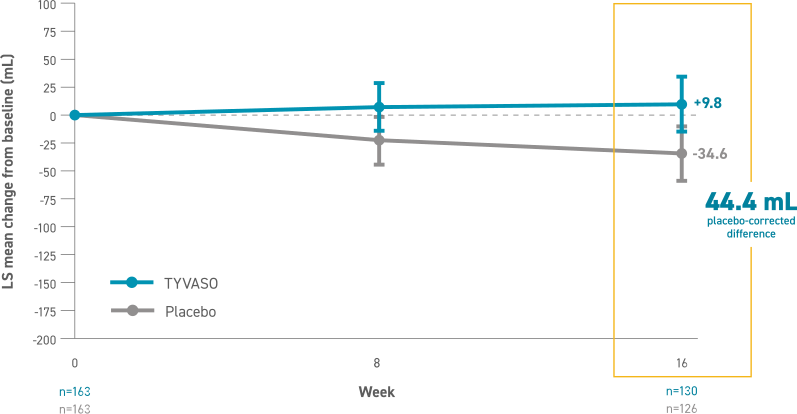
Impact on lung function in patients taking TYVASO compared with placebo3
-
FVC for patients in overall population3*
-
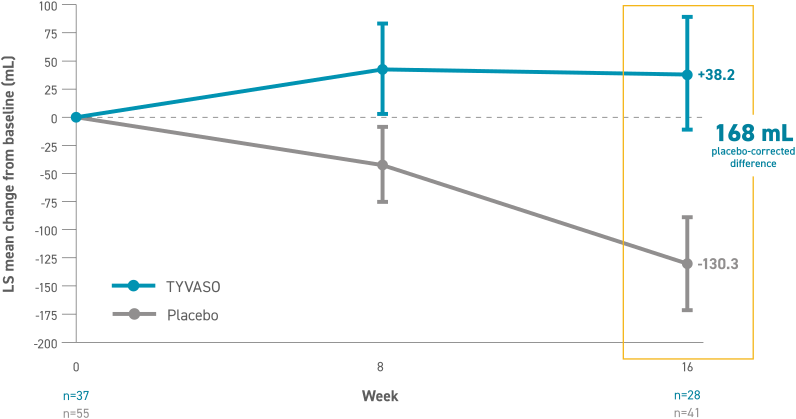
FVC for patients with an IPF etiology1,4†
Based on a concern that treating WHO Group 3 pulmonary hypertension with pulmonary vasodilators could worsen V/Q matching in patients, PFTs (including FVC) and exacerbations were included as safety endpoints due to the potential risk of V/Q mismatch.5
*LS mean (SE) and estimated difference (SE) are from the MMRM with the change from baseline in FVC as the dependent variable; treatment, week, and treatment-by-week interaction as the fixed effects; baseline FVC as the covariate; and patient as the random effect. An unstructured variance/covariance structure shared across treatment groups was used to model the within-patient errors.3
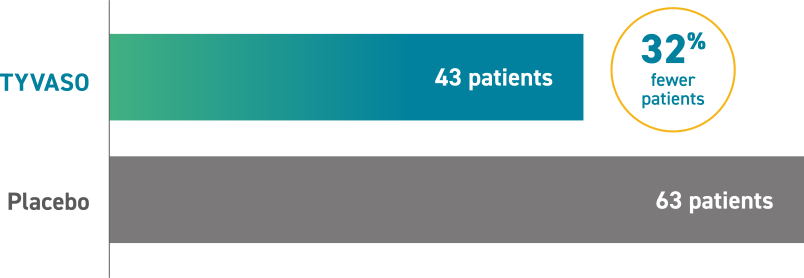
During the 16-week study, fewer patients in the TYVASO group had exacerbations of underlying lung disease4‡
Overall, 43 patients (26%) in the TYVASO group experienced an exacerbation of underlying lung disease during the study compared with 63 patients (39%) in the placebo group4‡
There was no evidence that TYVASO, an inhaled vasodilator therapy, worsened oxygenation, suggesting it does not contribute to the undesirable effects of V/Q mismatching.2
‡Exacerbation was defined as an acute, clinically significant respiratory deterioration characterized by evidence of new widespread alveolar abnormality determined by the investigator.1
AE=adverse event; FVC=forced vital capacity; IPF=idiopathic pulmonary fibrosis; LS=least squares; MMRM=mixed-effect model repeat measurement; PFT=pulmonary function test; PH-ILD=pulmonary hypertension associated with interstitial lung disease; SE=standard error; V/Q=ventilation/perfusion; WHO=World Health Organization.
The information contained in this section of the site is clinical in nature and specifically created for healthcare professionals. If you are not a US healthcare professional, please click CLOSE to return to the consumer section of the site.